About

Learn more about data centers, why policy matters, and how this platform helps people understand key decisions shaping digital infrastructure.

About the Data Center Policy Database

What a data center is and why you should care about them
Data centers are the physical facilities that power cloud services, AI systems, streaming, and nearly every digital platform people use each day. As demand for artificial intelligence accelerates, data centers are becoming major sources of electricity demand and local infrastructure pressure, which means their growth affects energy systems, communities, and long-term public planning.

How policy can help
Public conversations often miss the complex web of zoning approvals, tax incentives, utility rules, and permitting requirements that shape where and how data centers are built. Smart policy can improve transparency, protect communities, align development with energy goals, and create more consistent standards for evaluating trade-offs across states.

Why we made this site
We built this platform to centralize and organize data center policy information in a public-facing, standardized format. By making legislation and regulatory actions easier to compare across states, the site supports interstate coordination, strengthens public awareness, and helps people understand the real-world consequences of infrastructure decisions that are often hidden behind abstract discussions of the "cloud".

How we made this site
Our team researched local, state, and federal policies through desk research, legal databases, and by following local news and social media. The site was built and is hosted on DigitalOcean, a cloud platform that keeps it publicly accessible and easy to update as new policies emerge. While we believe this is the most comprehensive database available, we also know it is incomplete. If you find a missing policy or error, please let us know through our contact form. We also welcome examples of policies from other countries.

Glossary of Terms


About the team
Our team is focused on making data center governance more accessible, understandable, and actionable. We combine policy research and technical implementation to create tools that help communities, researchers, and lawmakers evaluate how data center expansion is reshaping the national landscape.


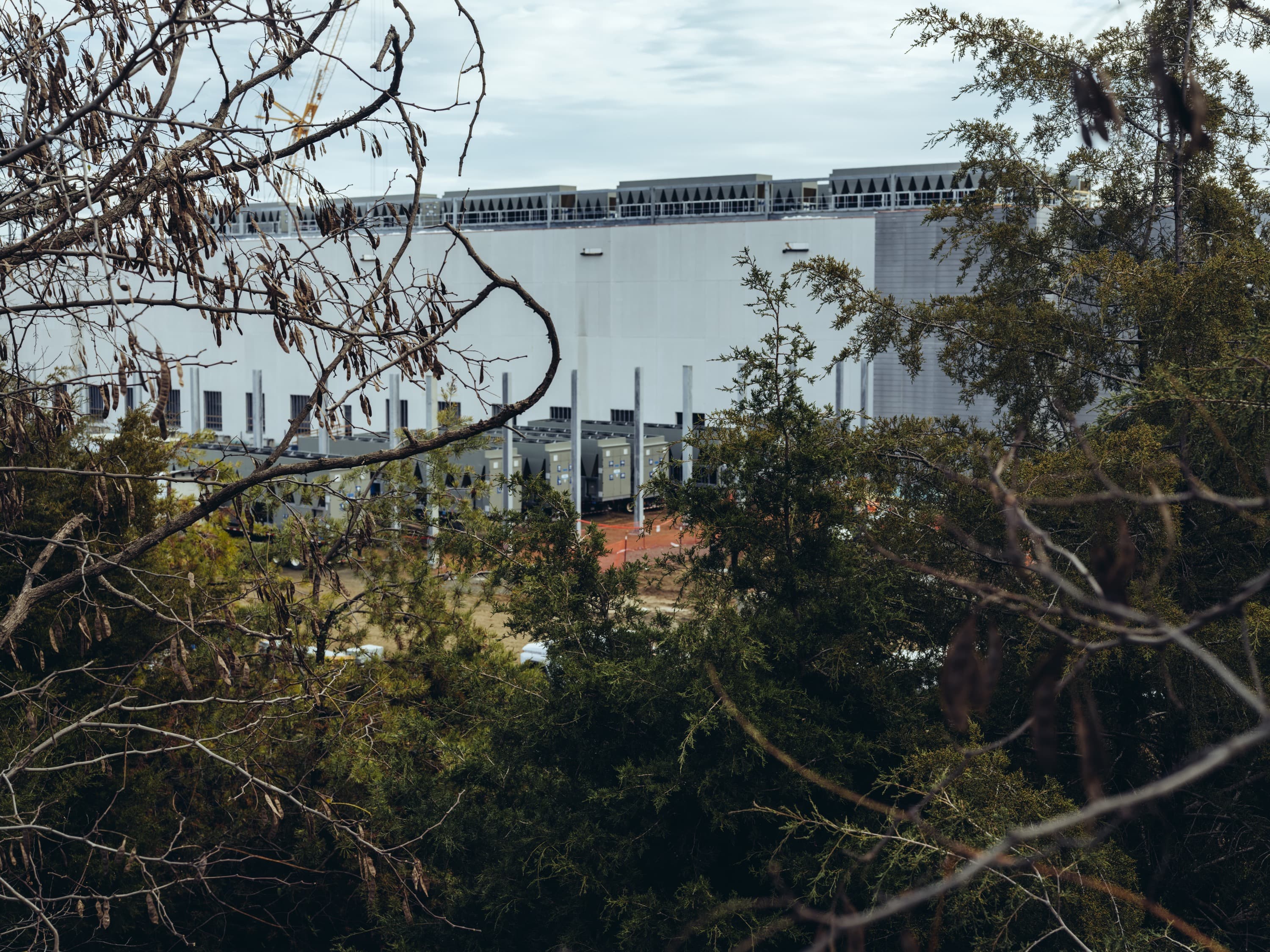
about-imageImage Credit: Stephen Voss

The Team

Meet the researchers behind this project.

Dr. Lauren Bridges headshot

Dr. Lauren Bridges

Project Lead

Dr. Lauren Bridges is an Assistant Professor of Media Studies at the University of Virginia, faculty co-lead of the Digital Technology for Democracy Lab at the University of Virginia, and faculty affiliate at the Berkman Klein Center for Internet & Society at Harvard University. Bridges is the Project Lead on the data center policy database and director of the Digital Infrastructure Governance & Society Lab (DIGS Lab).

Grace Gould headshot

Grace Gould

Policy Researcher

Grace Gould is a fourth-year media studies and environmental thought and practice major in the University of Virginia's College of Arts and Sciences. Grace works alongside Lauren Bridges as the co-lead of the Data Center Policy team's database.

Catarina Coelho Herrera headshot

Catarina Coelho Herrera

Policy Researcher

Catarina Coelho Herrera is an undergraduate student at the University of Virginia, majoring in global development studies and politics. At the DTD Lab, Catarina works alongside Lauren Bridges supporting research on emerging data center policy and digital infrastructure governance. During her time at UVA, Catarina has contributed to environmental and policy-focused organizations, working on projects related to climate action, infrastructure, and community engagement. Her academic work examines the relationship between policy design and lived experience, including ongoing thesis research on development and local perspectives in rural Appalachia. Catarina is interested in questions of infrastructure governance, regional inequality, and the role of policy in shaping community outcomes.

Isabella Scorsone headshot

Isabella Scorsone

Policy Researcher

Isabella Scorsone is a recent graduate from Wayne State University with a degree in political science and law. She plans to attend law school in the fall. Growing up in Michigan and working in a variety of state and local government agencies since she was 16, Isabella has seen firsthand the impact legislation and public involvement can have on communities. Her interests include public policy, government relations, and the ways policy decisions shape local outcomes and community development. During her time at the DTD Lab, Isabella worked alongside other policy researchers to collect research on emerging data center legislation and digital infrastructure policy. Her work involved tracking and analyzing legislation across government databases, policy reports, and news coverage to understand better how states and local communities are responding to the rapid expansion of data centers.

Jack Hauger headshot

Jack Hauger

Lead Software Developer

Jack Hauger is a computer science graduate student at the University of Virginia's School of Engineering and Applied Science. He also holds a bachelor's degree in computer science from the University of Virginia's College of Arts and Science. Jack works alongside Lauren Bridges as the lead programmer of the team's policy database and website. His graduate research focuses on data center policy, differential privacy in utility data, and AI security. Jack also collaborates with computer science faculty to create content for a carbon efficient computing class and to get UVA to join the Green Software Foundation. His work aims to leverage computer science to protect the environment and prevent it from causing social harm.

Photography
Stephen Voss avatar placeholder

Stephen Voss

Photography

Stephen Voss is a photographer in Washington known for his portraits of political figures. He regularly works for publications like Time Magazine, CNN and The New York Times Magazine. His photographs are held in the permanent collection of the Library of Congress and he has published two books.

Support provided by:

DTD Lab logo
Environmental Institute logo