

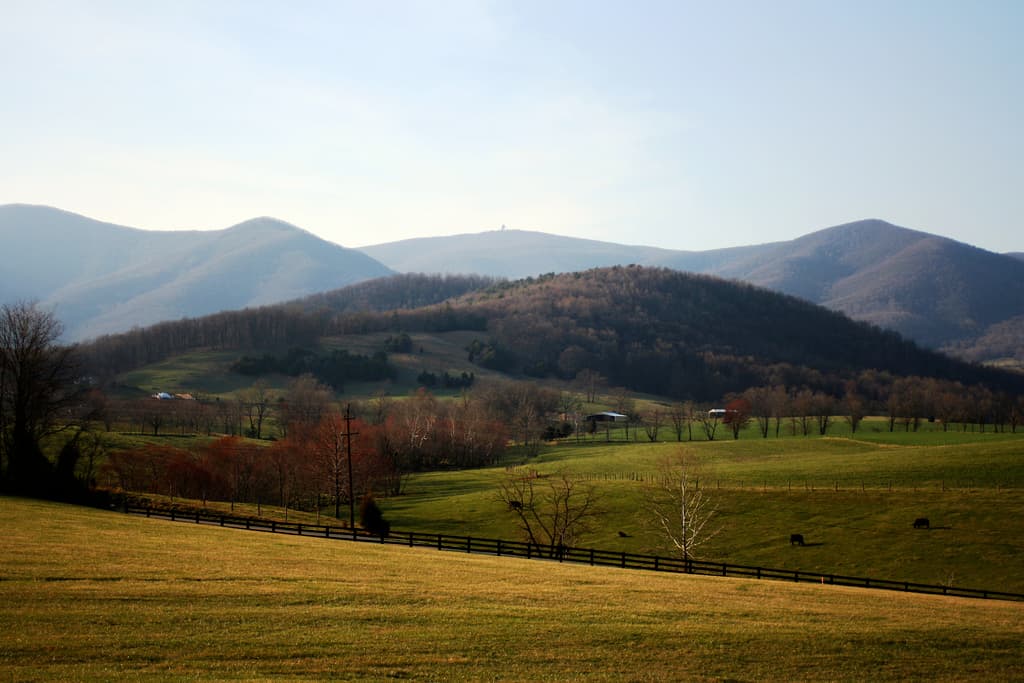

Botetourt County, Virginia, nestles between the Blue Ridge and Appalachian Mountains, near the headwaters of the James River. Home to more than 30,000 people, it is known for the landscapes that have long defined this part of the Commonwealth: mountain backdrops, historic streets, and the slower rhythms of rural life.
However, that is not why Botetourt has entered public conversation.
The county is now the site of a much larger national story. As data center construction accelerates across the United States to meet the demands of cloud computing and artificial intelligence (AI), rural counties like Botetourt are being asked to host the physical infrastructure behind that growth.
That expansion has left both communities and policymakers struggling to keep up. Residents want to know what these projects will require, especially when it comes to worries about rising energy costs, water consumption, and land depletion. Lawmakers are increasingly confronting the procedural gaps that surround this new wave of development.
Transparency is one of the most persistent of these gaps. Because data center development is highly competitive, key negotiations often take place behind closed doors. Project details are frequently shielded by confidentiality agreements and non-disclosure agreements, leaving the public with only a partial understanding of projects that may place major demands on their communities.
In Botetourt County, that problem came into sharp focus over one question: how much water a proposed Google data center might use, and whether the public had a right to know before the deal was done.
The project at the center of the dispute is substantial. Google purchased 312 acres for a planned campus that public notices describe as including three data centers, three substations, an office building, access roads, utilities, parking areas, and stormwater management facilities. Each building is expected to cover about 300,000 square feet. Together, the campus would take up most of the remaining acreage in the industrial park.
When the Roanoke Rambler, a local news outlet, sought contracts related to the project, the request did not produce full disclosure. Instead, the Western Virginia Water Authority, which had approved agreements to provide water for the project, released the contracts with the projected water-use figures redacted. The authority argued that the information was proprietary and said it was bound by an NDA. For Henri Gendreau, the Rambler’s founder, the issue was straightforward: despite Google’s claim, projected water use was not proprietary and should be made public. Gendreau took the water authority to court, and the numbers that were eventually released made clear the weight of the fight. Public agreements showed that the Google site could use an estimated 2 million gallons of water per day in its initial phase, with potential expansion up to 8 million gallons per day. At least in the first stage, that water would come from Carvins Cove, a major public drinking water source for Botetourt County and much of the Roanoke Valley. The authority has said its treatment system has the capacity to meet that demand. But the figures changed the public meaning of the project.
The community banded together and formed the Southwest Virginia Data Center Transparency Alliance. The grassroots group, with over 1,700 members on Facebook, points out its goal of to “organize and to educate one another and the larger community” about the “negative financial, health, and environmental impacts” of data centers, and linked the newly disclosed figures to larger questions about long-term supply planning and the pace at which local governments were advancing without public input.
At the same time, county officials have emphasized what they see as the project’s promise. Botetourt leaders have described the proposed campus as a major private investment and a chance for the county to participate in the economic growth surrounding artificial intelligence and digital infrastructure. “If this project moves forward, I cannot wait until folks around the world Google ‘Botetourt’ to find that we are leading the new revolution of AI.,” said County Administrator Gary Larrowe in an interview.
That tension between projected benefit and public uncertainty is real. But the core issue in this case is not whether one supports or opposes data centers. It is whether the public should have access to the information needed to understand how their communities may be changed before major agreements are already in place.
Judge Leisa Ciaffone’s ruling addressed exactly that point. She found that water-use information was not proprietary in this context and wrote that there are “few resources more precious than water.” She emphasized that the public has an “overwhelming interest” in how government officials manage it, especially at the beginning stages of a potential data center development. Her ruling appears to be the first in Virginia to hold that a data center’s projected water usage cannot be withheld under the state’s Freedom of Information Act as proprietary information.
That reasoning matters because it goes beyond the immediate records dispute. In court, the argument was raised that if Google ultimately became a customer of the water authority, actual water usage would later become public under state law. Ciaffone found that inadequate. “For the public to be given information on water usage when the ink is dry on the deal is useless,” she wrote.
The question raised in Botetourt is unlikely to remain confined to one county. As data center infrastructure expands across the state, so too will debates over who gets to understand and shape that change. “You’re going to see a growing level of frustration and discontent all across the commonwealth of Virginia as the infrastructure reveals itself,” said Chris Miller, the president of the Piedmont Environmental Council of Virginia to the New York Times. “They’re running into the basic political philosophy of most Americans. It’s like, ‘We get to decide how our community changes.’”
That is why the Botetourt case matters. Virginia has become one of the country’s defining arenas for data center growth, and with that growth has come a sharper conflict over what communities are entitled to know. The Botetourt dispute shows that transparency is not peripheral to the development process. It is central to it. If the public is expected to absorb the consequences of new digital infrastructure, then it must also have access to the information that explains what those consequences may be before construction begins and before the terms of the deal are effectively settled.
Learn more about bills aimed at addressing Transparency by clicking the “Transparency” filter under All Mechanisms in the database.